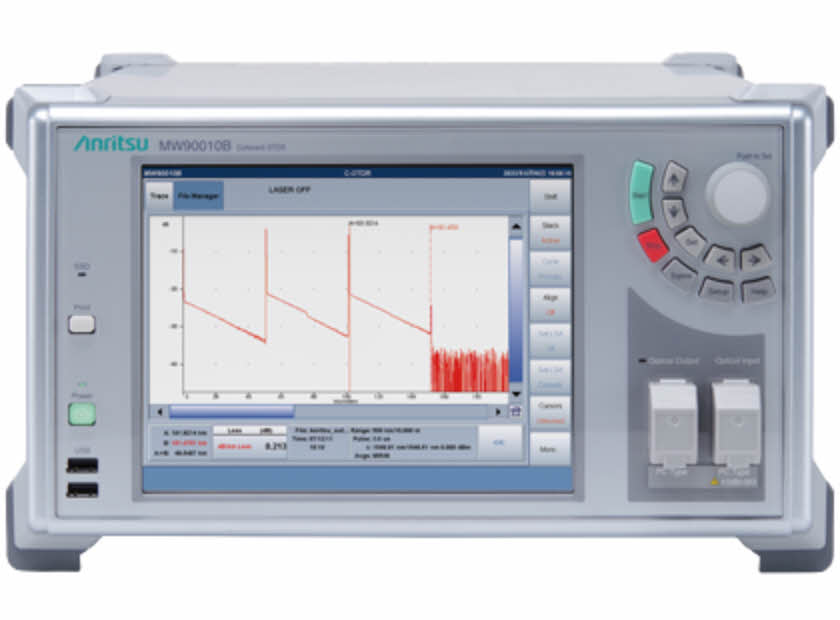
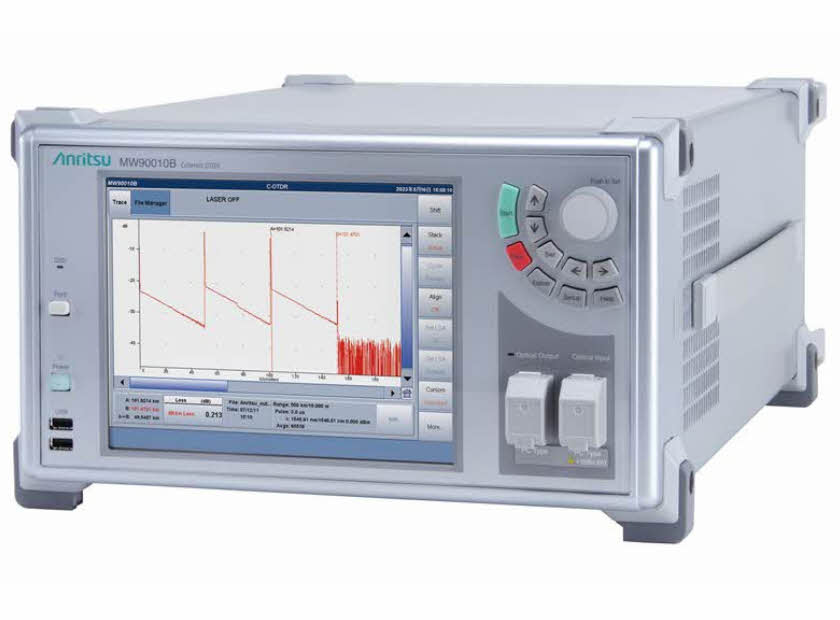
Anritsu MW90010B
Coherent OTDR (C-OTDR)
PT. Visi Indotama Perkasa | Anritsu Indonesia
Calibration Coherent C OTDR
Anritsu developed its world-first Optical Time Domain Reflectometer (OTDR) in 1977 and released a Coherent OTDR for evaluating optical submarine cables in 2008.
Following this release, Anritsu's Coherent OTDR has been a popular tester for evaluating and troubleshooting faults in optical submarine cables due to its ease-of-use, long distance range and wide dynamic range.
This model revision supports a wider wavelength range with added maintenance bands and is the perfect solution for the next decade of testing and maintenance
Product Feature
Full C-band Coverage
Wavelengths can be set in the range from 1527.60 nm to 1567.13 nm for quick testing and maintenance of multi-wavelength submarine cable by using unused wavelengths.
Measure Submarine Cables up to MAX 20,000 km Long with 10 m Resolution
The MW90010B can measure optical submarine cables of up to 12,000 km with a constant measurement resolution of 10 m. As a result, faults can be detected correctly irrespective of the distance. Moreover, adding the Extended Measurement Distance MW90010B-003 option supports measurement of optical submarine cables up to 20,000-km long.
Wide Dynamic Range
Typical optical submarine cables are designed with repeaters every 50 km to 60 km but the high resolution of the MW90010B easily supports fiber loss measurement of these systems as well as fault location of cables with repeaters spaced at more than 80 km.
Excellent GUI
A simple three-step operation using the intuitive GUI starts measurement. In addition, the displayed estimated time until measurement will finish, helps planning after starting.
Lightweight and Compact
The 40% weight reduction compared to previous Anritsu testers improves portability. The all-in-one design incorporates a tunable light source for easy on-site troubleshooting.
Simultaneous Display of 8 Waveforms (max.)
Installation and maintenance of optical submarine cables requires comparison of current waveform data with data at cable installation to monitor aging changes. The MW90010B makes this comparison easy because it can display up to 8 waveforms simultaneously, allowing faults to be seen at glance by comparing the install waveform with the fault waveform on one screen.
Built-in Standard OTDR Functions
The MW90010B has the full range of versatile built-in applications, including real-time measurement, zoom/shift function, 2-point loss analysis, etc., facilitating smooth analysis of measurement results
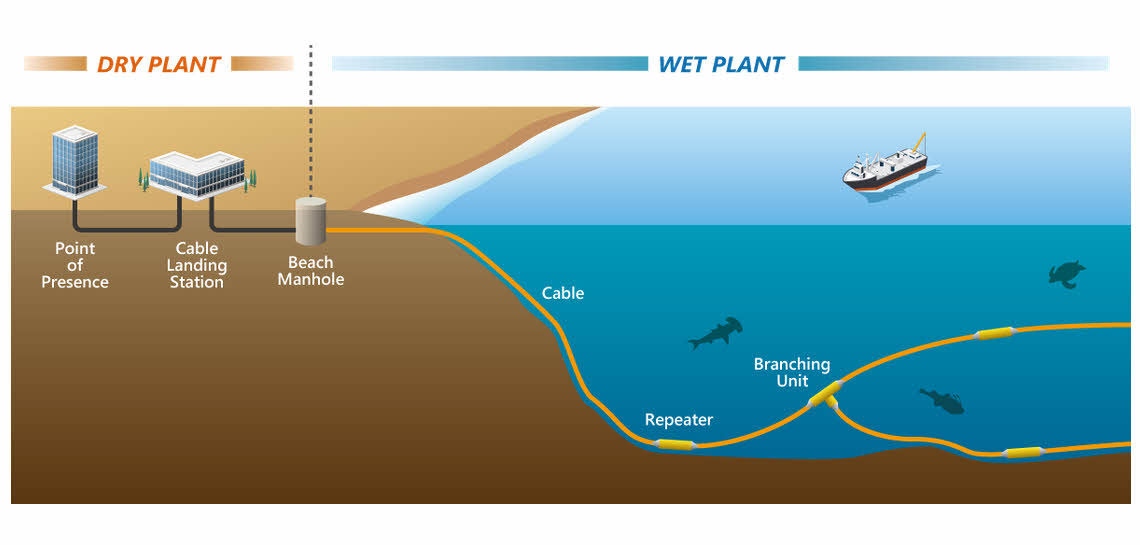

The typical submarine cable system consists of the following components
- Optical fiber cable
- Repeater, which has the following functions: Optical amplification function with Erbium-Doped Fiber Amplifier (EDFA) Point-of-failure monitoring function Optical distribution function
- Beach manhole, which is the connection point between submarine cable and land cable
- Cable landing station, which includes power supply equipment, monitoring equipment, circuit-terminating equipment
In the systems, the subsea portion from the beach manhole is called the wet plant, and the on-land portion is called the dry plant. In recent years, this has led to the increasing use of the open cable model, where the wet and dry plants are operated by separate communication providers. This results in the increasing use of the open cable model, clarifying the demarcation points of responsibility at the beach manhole.
Submarine cables typically remain in service for 25 years or so. Also, the equipment of the cable landing station is often upgraded at short intervals due to technological advances.
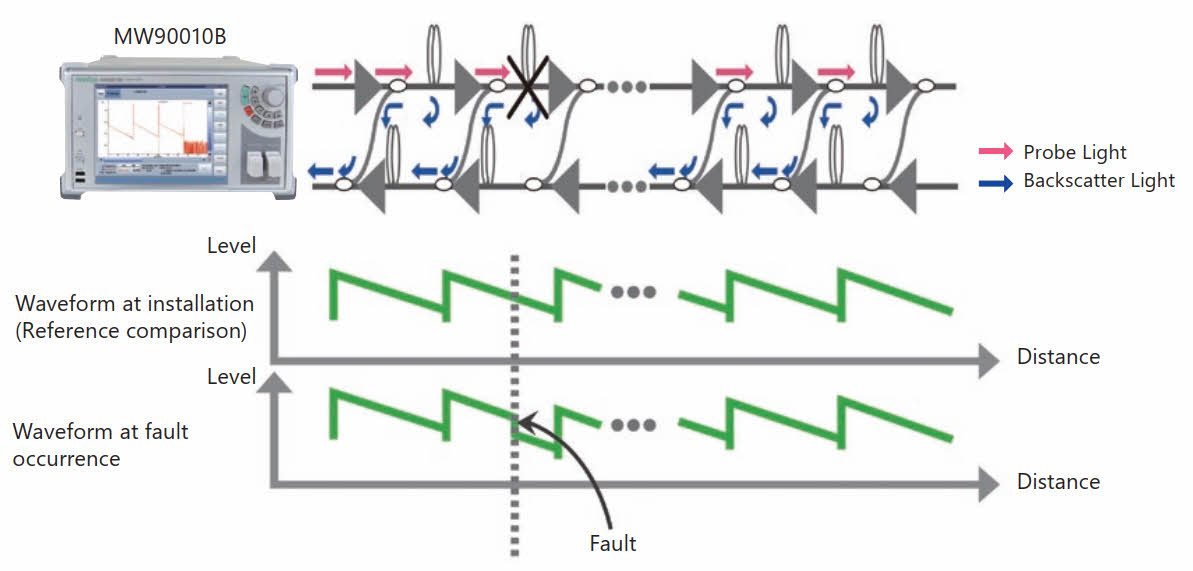
To accurately detect fault locations of a submarine cable over ultra-long distances, the Coherent Optical Time Domain Reflectometer (C-OTDR) with heterodyne (coherent) detection is the best way. The C-OTDR detects the Rayleigh backscatter light caused by the impurities inherent in the optical fiber, similar to a common OTDR
EDFAs, which amplify only optical signals in the transmission direction, are installed on repeater systems of ultra-long submarine cables, as shown in Figure 3. In other words, the backscattered light in the EDFA cannot return to its original path. Instead, submarine cables have optical fiber return paths called repeaters, which connect the uplink and downlink. This allows the C-OTDR to detect all backscattered light ahead of the repeater, enabling it to identify faults such as optical cable loss, bending loss, distance, and breakpoints between repeaters.
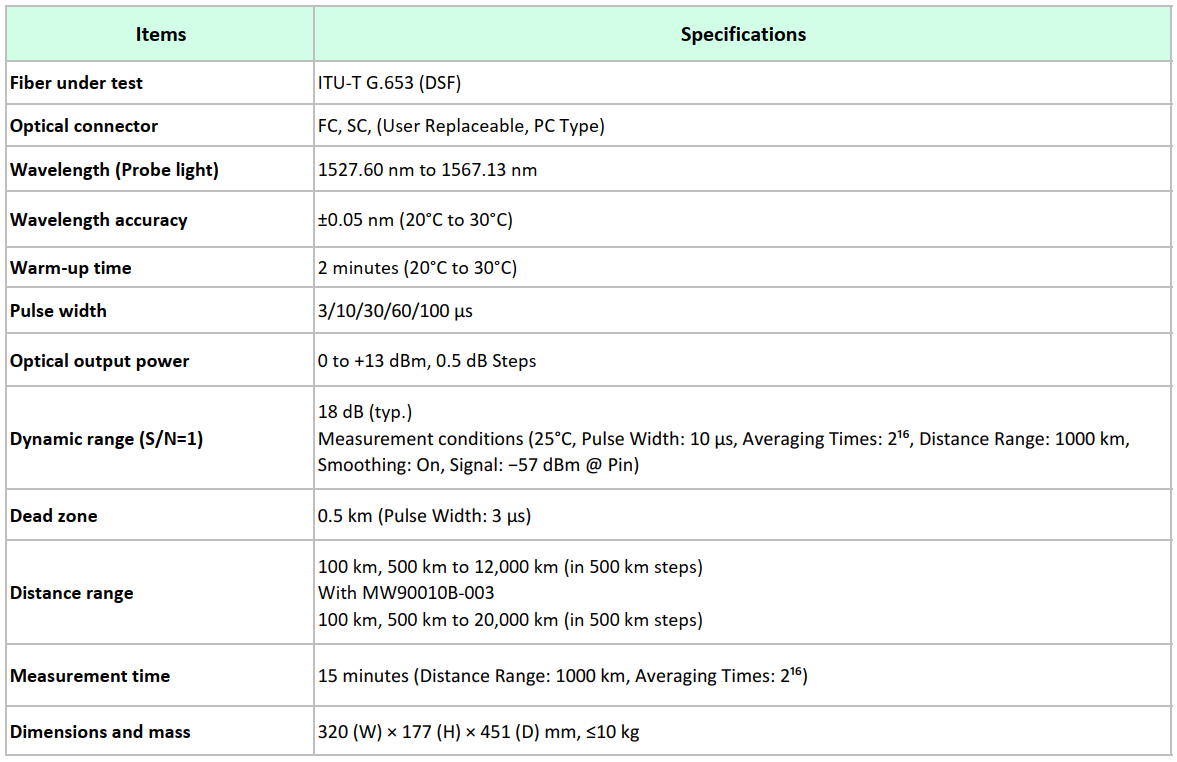
MW90010B Specification